
Showing all 26 results
-
Prio – Men
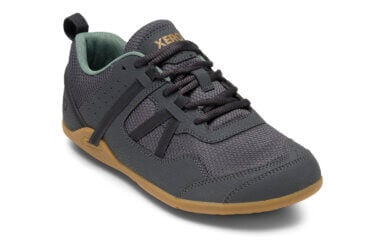
 $89.99
View Product
$89.99
View Product
-
Prio – Women
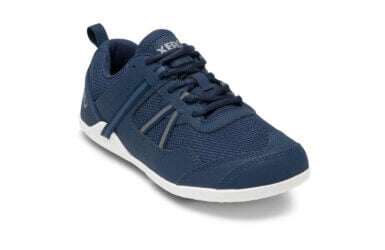 $89.99
View Product
$89.99
View Product
-
Prio Neo – Men
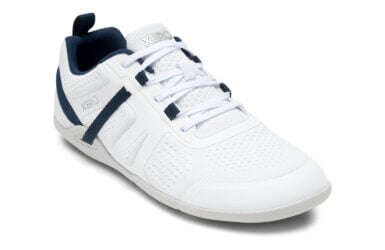 $99.99
View Product
$99.99
View Product
-
Prio Neo – Women
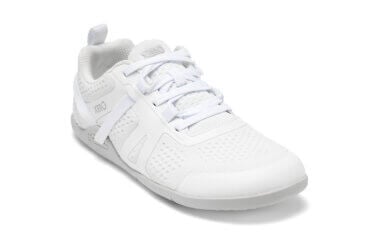 $99.99
View Product
$99.99
View Product
-
HFS II – Men
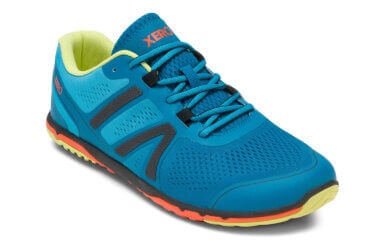 $119.99
View Product
$119.99
View Product
-
HFS II – Women
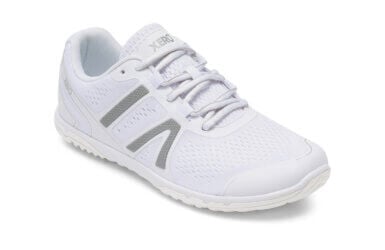 $119.99
View Product
$119.99
View Product
-
Speed Force II – Men
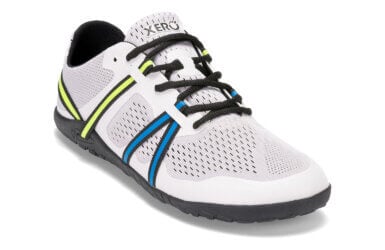 $109.99
View Product
$109.99
View Product
-
Speed Force II – Women
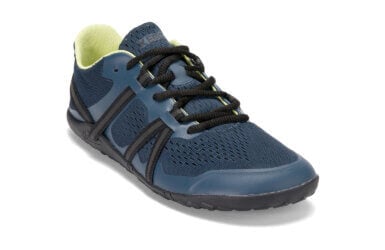 $109.99
View Product
$109.99
View Product
-
Mesa Trail WP – Men
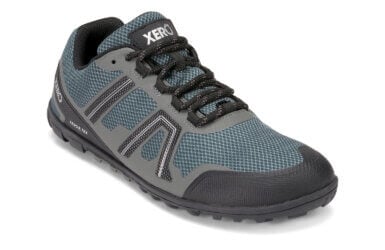 $139.99
View Product
$139.99
View Product
-
Mesa Trail WP – Women
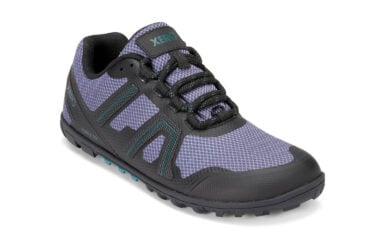 $139.99
View Product
$139.99
View Product
-
Prio – Kids
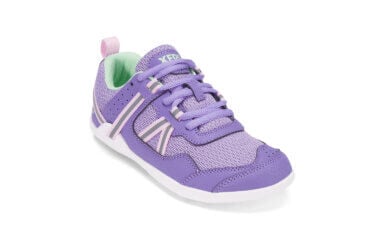 $69.99
View Product
$69.99
View Product
-
Born to Run Shoes – Men
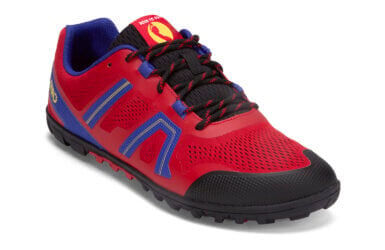 $119.99 – $129.99
View Product
$119.99 – $129.99
View Product
-
Born to Run Shoes – Women
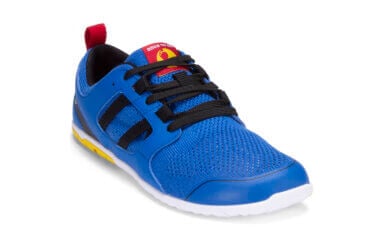 $119.99 – $129.99
View Product
$119.99 – $129.99
View Product
-
Prio Suede – Men
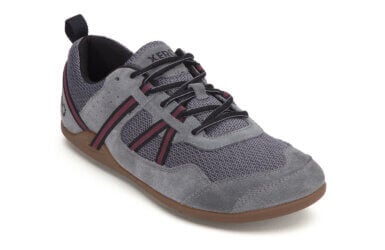 $109.99
View Product
$109.99
View Product
-
Prio Suede – Women
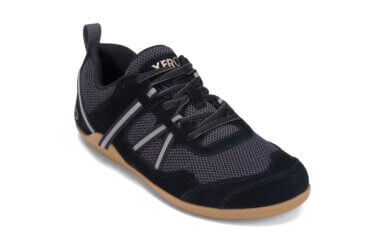 $109.99
View Product
$109.99
View Product
-
Prio All-Day SR – Men
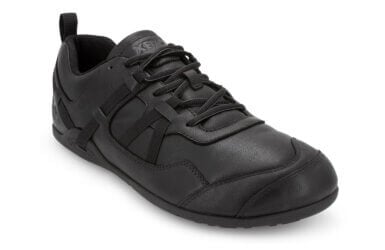 $129.99
View Product
$129.99
View Product
-
Prio All-Day SR – Women
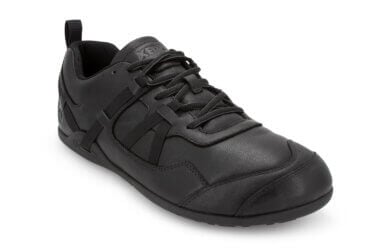 $129.99
View Product
$129.99
View Product
-
Mesa Trail II – Men
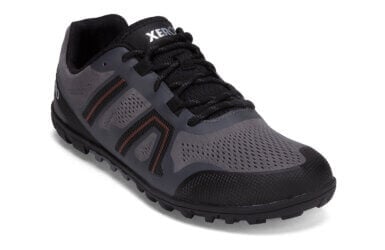 $119.99
View Product
$119.99
View Product
-
Mesa Trail II – Women
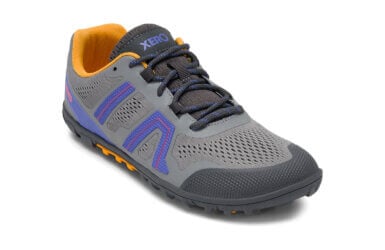 $119.99
View Product
$119.99
View Product
-
TerraFlex II – Men
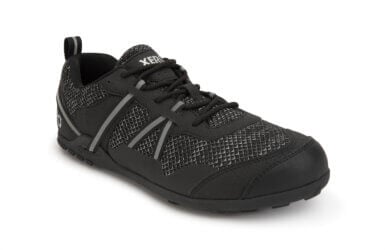 $109.99
View Product
$109.99
View Product
-
TerraFlex II – Women
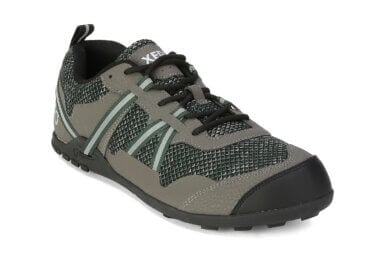
 $109.99
View Product
$109.99
View Product
-
HFS – Men (Clearance)
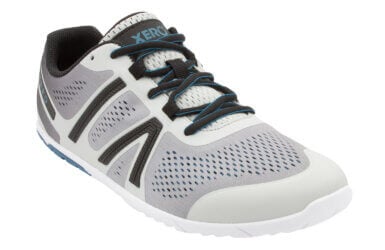 Sale!
Sale!
Original price was: $119.99Current price is: $83.99 View Product -
HFS – Women (Clearance)
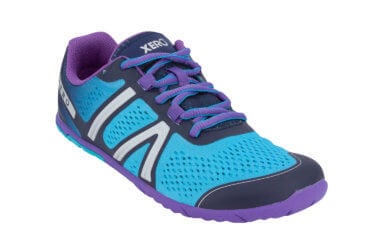 Sale!
Sale!
Original price was: $119.99Current price is: $83.99 View Product -
Speed Force – Men (Clearance)
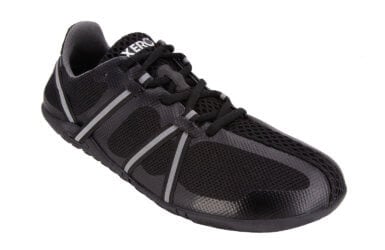 Sale!
Sale!
Original price was: $109.99Current price is: $76.99 View Product -
Speed Force – Women (Clearance)
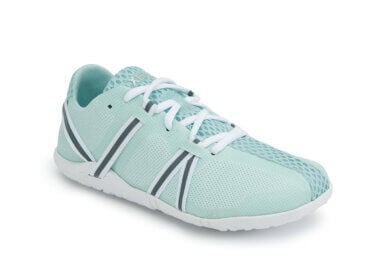 Sale!
Sale!
Original price was: $109.99Current price is: $76.99 View Product -
Prio – Women (Clearance)
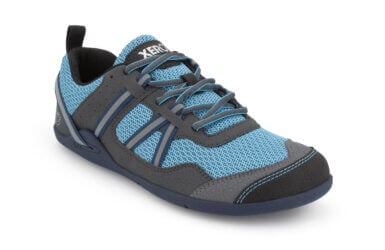 Sale!
Sale!
Original price was: $89.99Current price is: $53.99 View Product
Showing all 26 results

Men’s Barefoot Shoes Best Sellers
Women’s Barefoot Shoes Best Sellers
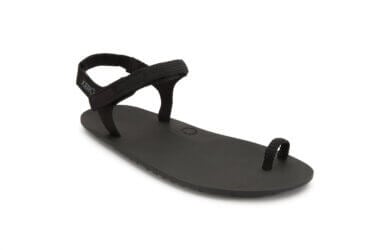
Barefoot Running Sandals
-
Z-Trail EV – Men
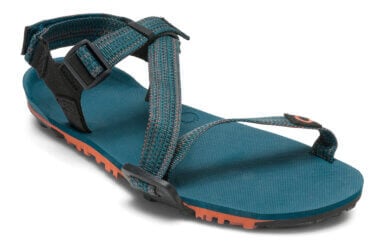 $79.99
View Product
$79.99
View Product
-
Z-Trail EV – Women
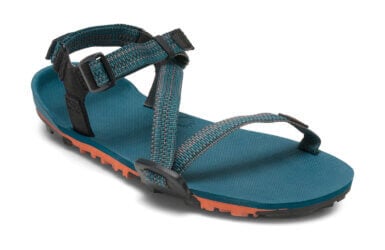 $79.99
View Product
$79.99
View Product
-
Z-Trek – Men
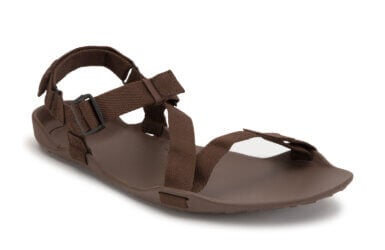 $59.99
View Product
$59.99
View Product
-
Z-Trek – Women
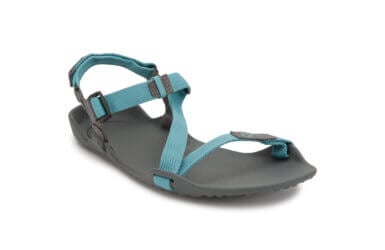 $59.99
View Product
$59.99
View Product
-
Genesis Sandal – Men
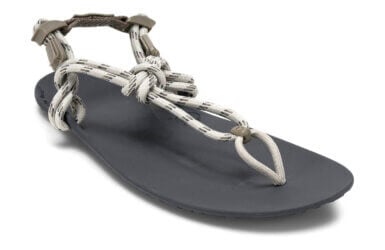 $44.99
View Product
$44.99
View Product
-
Genesis Sandal – Women
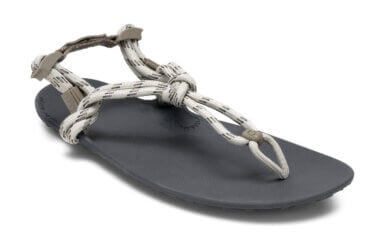 $44.99
View Product
$44.99
View Product
-
Z-Trail – Kids (Clearance)
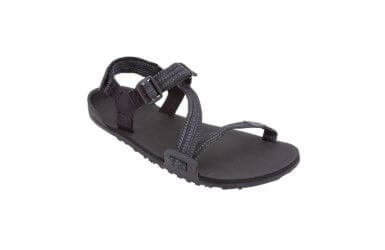 Sale!
Sale!
Original price was: $59.99Current price is: $29.99 View Product
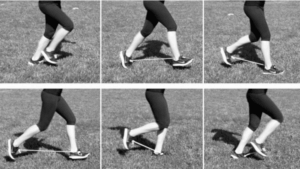 A Rubber Band is the Secret to Better Running? – Could a new form of foot binding be the secret to better running? I don’t mean wrapping up your feet in the infamous style of ancient China, but something developed… Read More
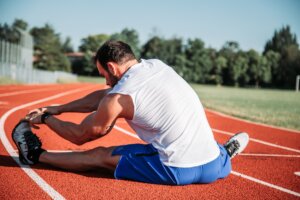 The Hidden Hamstring: Release Low Back Pain – Xero Shoes – By Matt Giordano, @theyogimatt Updated 7/26/22 The Lower Back Do you suffer from tight hamstrings? Many runners, active adventurists, and even those who sit at a desk all… Read More
Are barefoot shoes and sandals good for you? The simple answer is this: there’s no really good science that unequivocally says yes or no. I’m the first one to admit it and I’m the first one that if the science comes out saying that everything that I’m telling you is completely nonsense, I’ll be shouting that from the rooftops.
Let’s back up and think about this logically for a second though. I say this all the time: a quarter of the bones and joints in your body are in your feet. There are more nerve endings in the bottom of your feet than anywhere but your fingertips or your lips. Clearly, this is not an accident. Your feet are supposed to be used to bend, to flex, to feel things. If you don’t do that, what happens to the rest of your body? Your feet aren’t there just to be something that your legs can land on.
Back in 2015, my father died from a, sadly, way too common situation. He was 81 years old. He kind of shuffled when he walked. He hadn’t been barefoot in ages. He tripped on something, he fell down, he broke his hip, and two weeks later he was gone.
Every six months or so, you’ll see some research that comes out saying, “Hey, yoga is good for elderly people to regain their balance,” “Hey, tai chi is good for elderly people to regain their balance,” “Hey, magic vibrating insoles that stimulate their feet are good for elderly people to regain their balance.” This is all hand-waving. It’s all unnecessary. Take off your shoes. Let your feet work functionally, or let your feet work naturally and that function can restore itself.
There’s no science to back up some of these things. I’m just asking you to think logically. We do have one 80-year-old customer who emailed us and said, “I read what you said about the magic vibrating insoles. I was looking for those but I found your article instead and decided to put it to the test, and I started going barefoot two weeks ago and I just threw away my walker.” So the simplest thing I can say is that your feet are supposed to be used. Use them.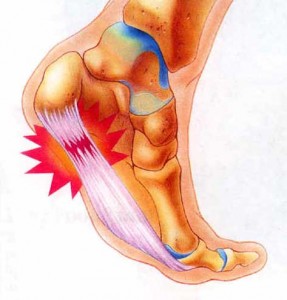
Plantar fasciitis is something that comes up frequently. People complain about plantar fasciitis. There are some doctors that recommend that natural movement is the cure for plantar fasciitis. The reason why is simply this: when you’re doing a bicep curl, you’re weakest when your arm is fully extended. You’re strongest actually about the halfway point. So extended is weak, contracted is strong.
Let’s look at your plantar fascia, which are along the bottom of your foot. When you land in a regular shoe; a big, stiff, motion control shoe, you’re going to typically land on the heel because with all that padding your body says, “Well, let’s just use that.” Whether it’s good for you or not, it just uses it. When you land with your heel outstretched in front of your body, you’re landing with your plantar fascia fully stretched, and when the foot comes down on the ground, when your plantar fascia are trying to flex, they’re in that weak position already. They can’t do their job.
If you’re landing more naturally, midfoot or on your forefoot, you’re actually landing with your plantar fascia engaged. It’s shaped like an arch, one of the strongest structure we know of. So when you use natural movement, you’re using your feet in the strongest way that you can, and we would argue that that’s good for you. We would argue that when you’re in a pair of sandals that let you feel the ground, the feedback that you get inspires you to change your gait into something that is more natural where you’re using your muscles, ligaments, and tendons as the natural springs and shock absorbers that they are rather than trying to rely on some silly technology to do the same thing.
Let’s have a talk about foam. I’m a former gymnast. I’ll never forget there was a time when they came up with a new trampoline bed. It was called an Aussie bed—I think it was basically plastic—and it was amazing. You could bounce so much higher on an Aussie bed trampoline. There was one thing that went along with that: you got tired so much faster. What it was doing was just allowing better transfer of your muscular energy into the bed and rebounding that, but you used more muscular energy.
Foam doesn’t work the same for everybody. Foam is kind of tuned in the same way that a trampoline bed is tuned. It’s designed so that it works for a certain weight at a certain speed, and I can guarantee you are not the weight and speed that the foam is made for. If you are, you’re lucky, but almost everybody else isn’t. The idea about barefoot shoes and about barefoot running sandals is simply that if you think about it logically, it would make sense that using your body naturally. Having something that fits your foot, having something that lets your foot bend and flex, having something that lets your foot feel, should be better for you.
Someday, I hope that we can end this argument and that we have the science that backs it up, but instead what you have to do between now and then is just use your brain. Think about it logically. Which seems like it would be better for your foot, something that’s stiff, and elevates your heel into an unnatural posture or something that lets your foot bend, flex and move naturally and feel the ground safely? Give it a whirl. See what happens. See what your experience is. Feel the freedom, feel the fun, feel the world.
In short, NO.
“Minimalist” was a term that big shoe companies came up with in mid-2010 to describe the shoes they created to capitalize on the sudden interest in running barefoot.
While “barefoot shoes” are minimalist, not all minimal shoes are barefoot.
Harvard’s Dr. Irene Davis defines minimalist/barefoot shoes as:
- No unnecessary cushioning
- No unnecessary “support”
- Wide enough for natural movement
- Flexible enough for natural movement
She calls shoes that do some of the above “partial-minimalist.”
Frankly, we call them “fake minimalist” because they claim to be the same as true minimalist footwear, but they’re not.
If you want to read more reviews from our customers, check out our reviews pages or the reviews section in every product’s page.
Once you get used to wearing barefoot sandals for running or for walking or hiking or anything else, it’s pretty addicting. In fact, both my wife Lena and I have the same story. We started wearing the Xero Shoes that we made and then, after a couple of weeks, had some reason to put on some other pair of sandals like Chaco or Teva or Keen or just even a pair of running shoes and just put them on, and went, “Oh yeah, I cannot do this.” We were so enjoying the fun and the freedom that we had from wearing our sandals.
The question comes up, “What do you do in winter?” I’m not telling you to do one thing or another, I’m just going to tell you just what I did. Seven years ago, as winter was approaching here in Colorado, I was curious. How long would I be able to go until I felt the need to put on some shoes? Suddenly it was March. Then I tried it again the next year – same thing, and the next and the next and the next. It’s now been seven years and I haven’t worn any footwear during the winter other than my sandals.
There are two things that I have done, one more than the other. The one that I’ve done very little of is add a pair of socks. Get a pair of thick wool socks and toss them on your sandals. Even with a huarache style sandal, if you got an oversized sock, you can squeeze your toes in there and the sock will just work its way around the toe post. Or, you can wear our sport sandal, which does not have a thong, and so you can easily wear a pair of socks with those.
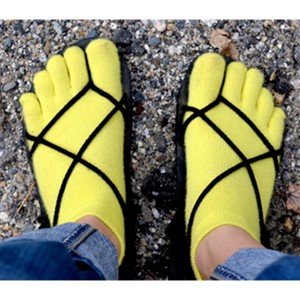
I will admit, when we developed our first sandal that you could wear socks with, Lena was a bit concerned because sometimes, you know, the sandal-sock combination is not the most attractive thing. But hey, I don’t care, we’re talking about winter, wear a pair of socks.
Some people use neoprene boots. I don’t personally recommend those because neoprene doesn’t breathe. The warmer your feet get the more they sweat, the more they sweat with something that doesn’t breathe the more water collects in them, and after a while neoprene smells like death. So be careful about something like that.
The second thing I do is I just change the way I deal with being outside. I don’t just go out without thinking for an extended long period of time. I will plan my trip so I go out and I come back before the weather gets too crazy. If I do have to spend a long time out, if I’m going to go for a run, I’ll go out for a little run first—I’ll warm-up inside, do some jumping jacks, do my warm-ups indoors—I’ll go out for a little run for two minutes, come back and warm up my feet. I’ll go out for another run for three minutes and come back and warm up my feet. Typically, after like three or four of these loops, the blood is really moving through my body and it’s really going to my feet, and I can go out for 20, 30, 40 minutes without a problem.
So pay attention. Be careful. Don’t be stupid. Don’t go past the point of being numb. As Ken Bob Saxton says, “Numb is dumb.” You don’t want dumb feet. Just know that what you can do in the cold is way more than you ever imagined you could. Experiment carefully, safely, and see what you discover. I can’t wait to hear.
What if the best shoes you could have for running are not shoes but instead are sandals? Why do I say that? I’m going to answer in a kind of roundabout way. Let’s think about human history. People have been running happily, successfully, enjoyably, pain-free, injury-free in sandals for thousands of years, as far as we could tell maybe 10,000 years plus. If you think about shoes, prior to the invention of the modern running shoe, people were running in things that were practically sandals—really thin sole, really thin upper—without any problem.
Some people might say to me, “Steven, that’s the naturalistic fallacy. What you’re saying is that’s the way people did it in nature or with very minimal intervention, but that doesn’t mean it’s better for you. Maybe someone invented something good for you with modern technology.” That’s a really good question. If we’re going to assume that a modern running shoe is better than sandals or being in bare feet because of modern technology, well, we should be able to prove that, right? Where’s the evidence?
If you start looking, you will find that there is no evidence. You will find there is no evidence that the modern running shoe improves performance and reduces injuries compared to what people were doing for hundreds and thousands of years prior to that. Additionally, if you look at what running shoe companies do – every six months there’s a brand new technology that’s going to improve your running and reduce your injuries, and yet they never seem to land on one that works.
Think about it this way: The running shoe industry is a multibillion-dollar industry. Every year, just in America alone, if you could develop a shoe that reliably and demonstrably reduced injuries and improved performance, that’s worth hundreds of millions if not billions of dollars. These big shoe companies have a lot of incentive to do that. Why haven’t they? They’ve got all this research and scientists behind them, why haven’t they done it?
My argument is because they’re barking up the wrong tree. The basic idea behind what traditional shoes do is faulty to begin with and I’ll talk more about that in a second, but let’s just back up to, why sandals?
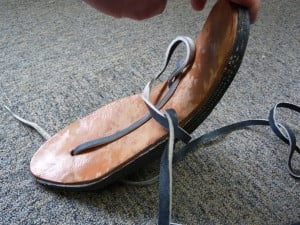
The answer couldn’t be simpler. A running sandal is everything you need and nothing more. If you think about what you need, why you wear a shoe, the most important reasons are to protect your feet and to hold that protection on your foot. That’s it. Let’s take a dive into running sandals and you’ll see what I mean.
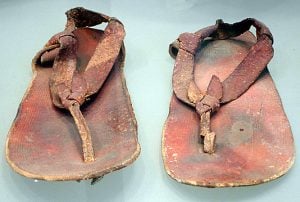
To the left is a Tarahumara huarache. This is their running shoe. It is a sandal made out of a piece of used tire, some leather glued onto that, and a leather strap that you wrap around your ankle. That’s it – protection and something that holds that protection on your foot, little bit of comfort with the leather on the top. It’s all they need.
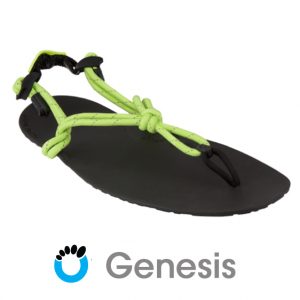
A pair of Xero Shoes are a very similar idea. Our Genesis Barefoot-Inspired Sandal has a really thin sole, really flexible, it let’s your foot move naturally, and just enough lacing to hold it on your foot. Can you actually run in this? Yes. We have thousands and thousands of people running in everything from casual 5Ks to ultramarathon. In fact, if you look at that couple below, that’s Jon and Mel Sinclair at the end of a 50-mile race when they were wearing just a pair of Ventures (the precursor to the current Genesis).
 |
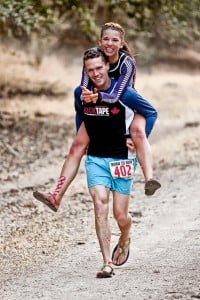 |
You might look and say, “Well, wait, you said protection and that does not look like much protection.” You’re right, it’s not. Mel and Jon run trail marathons, so you don’t need as much protection as you think if you’re paying attention to what you’re doing with your feet. If you want some more protection, we’ve offer a shoe with that as well.
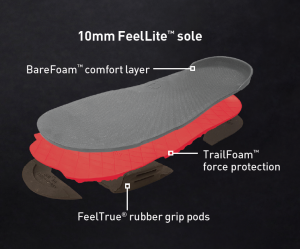
Check out our Z-Trail Sport Sandal, really trail-friendly. What we’ve done here is taken the FeelTrue® rubber that we use on our Genesis, added TrailFoam™ to even out the bumps, and BareFoam™ to add a little comfort. Look at how simple it is. It’s just something to protect your foot and something to hold it on your foot. The Z-pattern webbing here is just very secure but don’t be fooled, the simple three-point design of huaraches has enough to hold on your foot for ultramarathons. The Tarahumara run hundreds and hundreds of miles in a pair of huaraches with the same three-point design.
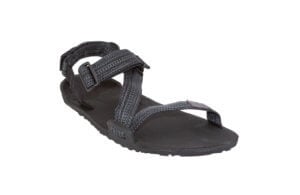
The Z-Trail Sport Sandal |
 |
Another reason to think about running in sandals; we would argue that when you run in sandals compared to traditional running shoes, you can improve your running, you can get better, and maybe you can get healthier and get rid of injuries. I don’t have science to back it up, I’m not going to make any medical claims, but let’s talk about science.
Back in 2010, Daniel Lieberman from Harvard did some research that showed that when you’re in a pair of running shoes you’ll typically land on your heel with your foot out in front of your body and a straight leg because of this big thick padding around the heel. Every time you land you’re applying braking forces, literally like hitting the brakes on your car, and those forces go in what he calls an impact transient force spike. A very rapid, very extreme amount of force that goes straight through your heel and through your joints – through your ankle, your knee, your hip, your back, all the way up to your head.
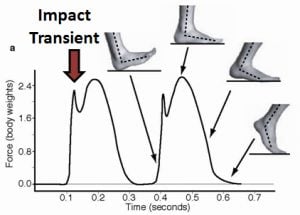
If you take off those shoes, if you have something that’s just barely on your foot, that force goes away. The reason that it goes away: you stop landing with your foot out in front of you and applying braking forces that hurts you. Instead, get your foot underneath you more and you land typically midfoot, flatfooted or on the forefoot and then let your heel drop down as your arch works naturally. You use your muscles, your ligaments, and your tendons as the springs and shock-absorbers that they are meant to be.
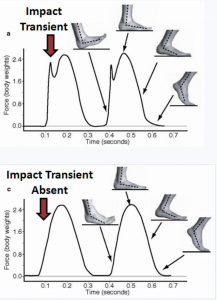
Let’s back up and talk about heels for a second. The first running shoe just lifted up the heel, added padding under the heel. Let’s look at heels. What shape is the actual heel bone? It’s a ball. Have you ever tried sitting on one of those Fitballs? It’s hard to balance because you don’t have any way of really stabilizing you from above. Look at the big thick heel of traditional running shoes, when you land on that, what does that do? There’s nothing to stabilize that landing and your foot deforms.
It’s the same idea with traditional running shoes. You don’t have anything stabilizing your heel from above when you’re landing on your heel. What running shoe companies did next is added pronation and supination control and motion control to prevent the instability they caused. When you’re not using regular shoes, if you’re using a pair of sandals, there’s no elevated heel, there’s no extra padding, and as a result there’s no need for all of that control and support. When you land on your heel, your foot is essentially landing and getting completely stretched out by the time it hits the ground. That puts a huge amount of strain on your plantar fascia. The next thing people started developing was arch support. Your arch wasn’t being used, so it’s being flattened out. So now you’re supporting the whole foot.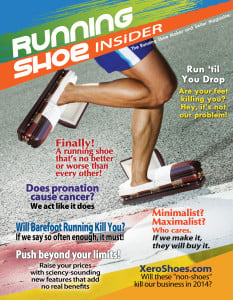
Let’s talk about support quickly. If you put your arm in a cast, what happens to it over time? It does not get stronger; it gets weaker. If you put your foot in a cast, it does not get stronger over time; it gets weaker. If you do this long enough, you will know why we refer to these as foot coffins. You’re making your feet progressively weaker and weaker. If you’re running in a pair of sandals where your foot bends and flexes naturally, you can actually use the muscles, ligaments and tendons the way they’re designed. If they’ve been asleep in foot coffins, sandals can strengthen them.
Am I saying you’re absolutely going to strengthen your feet? No, we don’t have some specific bit of science that goes along with that, but think about it logically. Traditional shoes do not let your foot bend. It’s like being in a cast. Minimalist sandals let your foot do whatever it wants because there’s nothing getting in the way. Which do you think might let your foot work more naturally, especially if you’re doing things that require foot strength? That’s all I’m going to say about that.
Why else might you like to run in a pair of sandals instead of running shoes? The freedom. Oh my gosh. All you need is a little bit of lacing holding the sole on your foot, and a little protection. When you feel the lightness and the freedom that you get because the air that’s moving around your foot. There’s nothing on top of your foot, your toes can flex without having anything in the way. Just that little bit of fabric, when you feel that on your toes, for many people it will restrict your movement because your body goes, “Oops, something in the way, better not do that.” There’s nothing restricting your movement in a pair of sandals.
The fit, I don’t know about you but traditional shoes are not even close to foot shaped. Even minimalist shoes, while the forefoot is closer to the shape of a foot, the midfoot area, many feet are not that thin here and still have unnecessary support. With sandals you won’t have that issue because we make them wide enough to allow your foot to fit properly. With our Genesis sandal or our do-it-yourself kits where you can make your own sandals the way people have been doing it for thousands of years, you can trim these to fit your unique foot shape, so you get something that fits your foot, not something that squeezes your toes together into a giant point. Whose foot is pointy like traditional shoes? Not very many people.
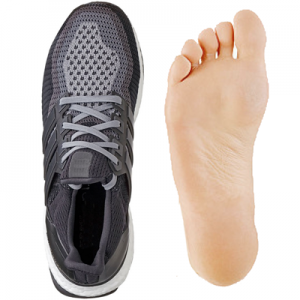
Really quick aside: Don’t confuse barefoot shoes with sandals, or with bare feet. There was a study that came out that showed that most people in barefoot shoes weren’t making the form changes that I talked. There’s still enough padding and enough protection that they can’t feel the ground. They can’t feel what’s happening if they’re running incorrectly. If they’ve been running incorrectly, up until now, there’s no feedback that says, “Hey, you might want to try something a little different.” So, just be careful if you make a transition.
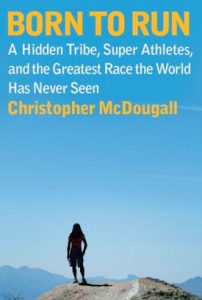 In 2009 and 2010 the idea of barefoot running became more popular mostly because of the success of the book, Born to Run. The running shoe companies started adopting these terms like “barefoot shoes” to claim that you were going to get the same benefit in their product that you would if you were barefoot. There’s no evidence whatsoever.
Think about this: When you’re running in a huarache style sandal, it’s like you’re being barefoot but right before your foot hits the ground someone just throws a piece of rubber on the ground underneath you. There’s nothing getting in the way. If you run in a pair of barefoot shoes, they are flexible in the forefoot, but totally stiff through toe and midfoot, and again, doesn’t really fit. Don’t confuse barefoot shoes with sandals, which give you a whole different set of performance characteristics.
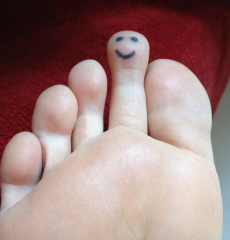
Just because a shoe looks like feet, like Vibram FiveFingers shoes, doesn’t mean they act like feet. If those shoe had fit my feet—I have Morton’s toe, my second toe is longer—if they had fit my feet I probably would have never started Xero Shoes. Because they didn’t fit my feet, I started looking for alternatives and started making barefoot-inspired sandals. That’s how it all began.
Speaking of those particular products or any shoe, something else you don’t get with sandals – smell. Or, marital problems. We know people who have practically gotten divorced over the smell of their spouse’s FiveFingers or running shoes. When your foot is encased in something that can get moist and dark and hot, that’s where bacteria grow. That leads to odor and other problems as well. In a pair of sandals where your feet are free, you don’t have that issue.
Backing up really quick, you don’t need to run in a pair of sandals. You don’t need to use a sandal for running. You can use them for recovery if you want. If you want to use a pair of sandals just for recovery, you can. Run in a pair of traditional running shoes and then recover in sandals. You might want to ask yourself, “Why am I having to recover?”
What I can tell you is; if you use your feet naturally, you will probably that you eliminate the need to recover. You’ll get some authentic muscle soreness, and I mean if you’re running properly you’re not going to get unnecessary soreness. You don’t need to have ankle soreness or calf soreness or Achilles soreness, but  you could feel at the end of a long run that you have used your feet. That’s one thing, but not the kind of thing where you feel like you need recovery, where you can’t move and you just need footwear to get you from place to place.
Backing up again to Jon and Mel as an example, they did a 256-kilometer seven-day stage race across Madagascar in a pair of our Amuri Venture sandals (now the Genesis). At the end of the race all the people who were in shoes, they’d been going through water and out of water, they were wearing socks or taking off their socks, and everyone else, their feet were mangled – skin was coming off, nails were coming off. They were totally, totally fine. No need for recovery.
If you don’t want to run in a pair of sandals, totally fine. Use them for taking a walk or going for a hike or just enjoying how it feels. Feel the freedom, feel the fun, feel the world. Give it a try.
The first barefoot shoe that came out, or the first shoe that people thought of as a barefoot running shoe, was the Nike Free and I got a pair of those. This was a good 10-plus years ago and it was miraculous. The sole was flexible in such a way that you would walk and you would actually feel the undulations of the ground in a way that you never felt before. It was incredible, it’s also perhaps the bestselling barefoot-inspired minimalist shoe ever made. People don’t wear it just for running – people wear it casually. They wear it to the office. They wear it to the gym. They wear it just for walking around. It’s just an admittedly seemingly comfortable shoe.
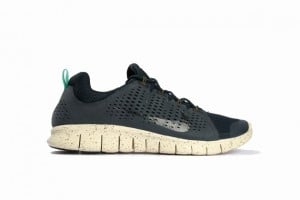 Once I started going truly barefoot and truly minimalist and once I started making and wearing Xero Shoes, I put on my Nike Free again and I was dumbstruck because it has a really high heel, which can offset your posture. It has quite a bit of arch support, which frankly I don’t need, and support is mostly unnecessary if you use your foot naturally.
Let’s take a moment to consider the arch of your foot. It’s a very strong, stable, structure. It doesn’t need extra support. In fact, when you put extra support on this structure, it makes the whole thing weaker. If you push up on the keystone of an arch, the whole arch falls down. Support is highly misunderstood.
This was the first sole that was really flexible, but it’s not nearly flexible as something that you get from Xero Shoes where you can really feel the ground. Now, if you’re worried about feeling too much, that’s okay because we have soles of different thicknesses. We have a 4-millimeter Connect sole and that’s really close to barefoot. The thicker sole that we use in our 6-millimeter Contact do-it-yourself kit or on the Genesis gives you more trail protection. Then the 10-millimeter FeelLite™ sole that we have on our Z-Trail, it gives you an amazing amount of protection in something that weighs next to nothing and is still crazy, crazy flexible. Comparatively, there’s whole different layer of flexibility that you get from Xero Shoes compared to the Nike Free.
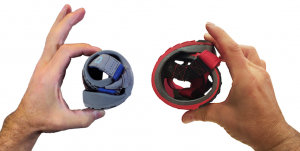
I’ve gotten so used to the freedom that you feel in a sandal that I can’t really wear that shoe comfortably anymore. While the forefoot is nice and wide in the Nike Free, it’s got a pointy toe and my toes aren’t pointy. So be attentive to when someone uses the phrase “barefoot shoe” for something where they’re saying it gives you the fun and benefits of being barefoot, but when you look at it logically you have to kind of go, “I’m not so sure.”
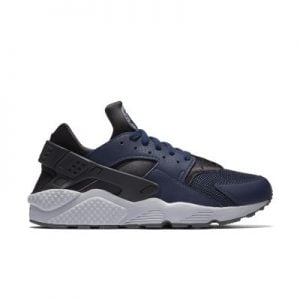
Speaking of Nike shoes, we refer to our sandals as huaraches, inspired by the Tarahumara huaraches that they make out of tire tread and a piece of leather and some leather lace. Our sandals were inspired by those. Nike has a product called the Air Huarache and if you look it up, it doesn’t look anything like a sandal, doesn’t look anything like what the Tarahumara would wear. I don’t know why the name works but you might find some confusion with that when you look up huarache and see the Nike Huarache, and it’s certainly not something like our sandals or definitely not something like a traditional huarache.
|
|
 |
Just use your brain. I trust that you’re smart enough to figure out the gap between reality and marketing. If you have any questions, feel free to ask. We’re just here to help.
If you want to make a pair of barefoot shoes, you can. It’s really simple and it’s a lot of fun. People have been doing this for thousands of years. It’s not rocket science or, as they said 5000 years ago when they first started doing this, it’s not rock science. We’ve tried to make it easier for you.
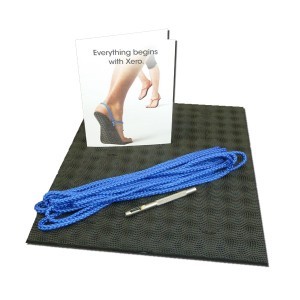
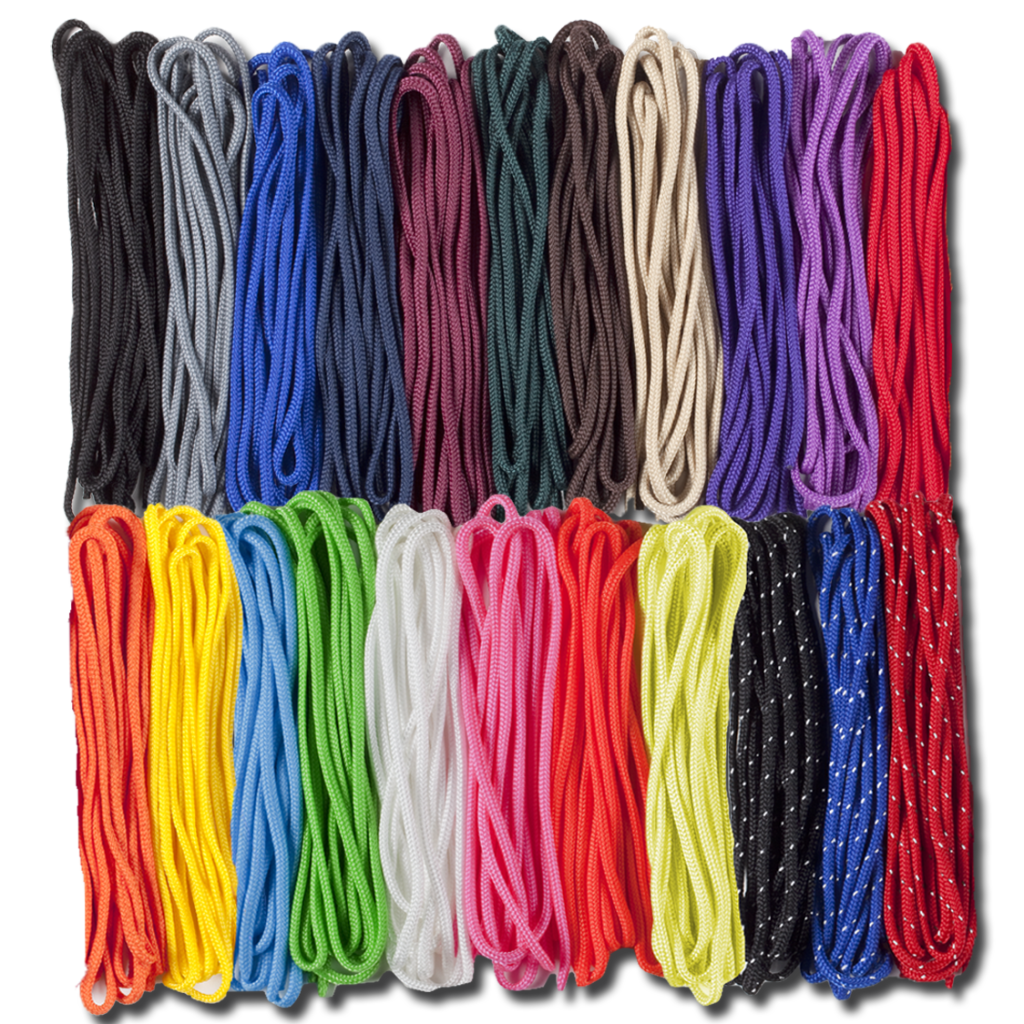
We have two do-it-yourself kits, our classic kit, which is what we started doing when this was just a hobby of ours. It’s a sheet of Vibram Cherry rubber, that we cut into smaller sheets and that we sell with our laces and instructions on how to make them. You can buy one of 22 different colors of laces, and there dozens of different tying styles that you can do as well.
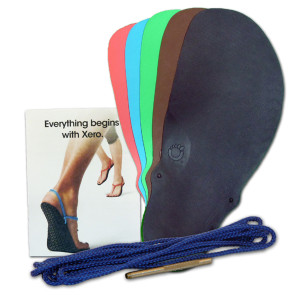
We decided after a while to improve on that product and make something specifically for barefoot shoes. We developed what we call FeelTrue rubber, comes in a couple of different colors, comes in a bunch of different sizes, and is already foot-shaped to begin with. It already has ankle holes punched into it so that the only thing you need to do is take hole punch that we give you and punch a hole where it fits for your unique foot shape. You’re going to do that in between your first and second toe just in front of the webbing. Then again, grab the laces, lace them up. Dozens of different ways of lacing them.
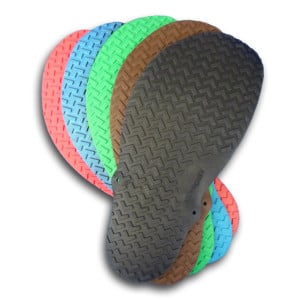
The other thing with the FeelTrue rubber, we developed this sole, our dual chevron tread. This gives you great grip whether you’re going uphill, downhill, fast or slow, wet or dry, and we have a nice grippy top surface as well that gives you good traction without too much friction. Nice contour design. It doesn’t provide unnecessary support. The soles, both the 4 and 6mm, don’t naturally flop or bend. They keep a good shape.
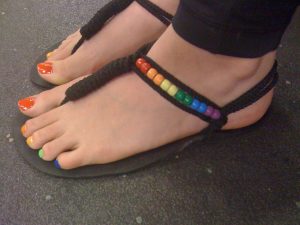
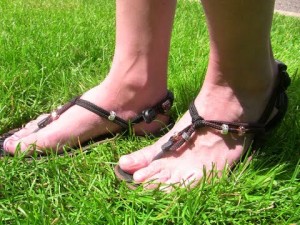
Once you get the shoes, you can experiment with lots of different tying styles from really ultra-minimalist, or you can get blingy. We had a customer who painted her toenails and then added beads to match her toenails. You could do something a little more gladiator or Tarahumara style. People have used webbing that they had lying around. It’s not something that we currently sell. You can use your own laces and webbing; you don’t have to use just what we sell. You can add a bead or charm if you want to get a little decorative, or if you want to get totally blinged out, something Lena did when we were on Shark Tank is photo’d below.
 |
 |
The DIY Kits are a great project for kids, a great project for the family. It takes a few minutes to develop what I call the superpower of knowing how to make your own footwear, and then once you do you can feel the freedom, feel the fun, and feel the world.
People sometimes ask us if we use leather in our sandals and the answer is as of now, in all of our sandals, we do not, and we don’t for a couple of reasons. One, we like having a product that if you’re vegan that you can wear. We’re not vegans ourselves but we like having something that is suitable for vegans as well.
The other reason is if we use leather in the foot bed or on the lace, there are some performance characteristics that we’re not crazy about. While leather can feel comfortable for a little while, it can wear out quickly. It does not handle water well when it gets wet; it gets floppy, and then when it dries it can get stiff. The patina that it gets is actually caused by dirt and bacteria, so we’re not crazy about that either.
With leather laces, there’s the same stretching and contracting issue when they get wet, and like most natural materials. They don’t necessarily wear as well as a synthetic like the polyester that we use in our laces. They’re less abrasion-resistant. Also, leather is typically going to be rectangular, it’ll have these edges. Depending on how you tie this around your foot and what you’re doing, you can get some digging into your skin, which we try to avoid with our round laces and our tubular webbing. There are no edges on our webbing as well.
We do, however, have a few shoes made with leather, the previous Coalton, Melbourne, and Alston styles, as well as our current All-Day Prio, and leather versions of the Phoenix and Hana. We received thousands of requests from customers who wanted shoes that gave them natural, barefoot-inspired movement, but would allow them to work in a place where leather shoes were required.
If you want to read more about minimalist shoes, check out xeroshoes.com/shoes/minimalist/.
If you want to know more about running in sandals, check out xeroshoes.com/sandals/.
If you want to see which Xero Shoes are right for you, check out our Product Guide.
I know that when I use the phrase “barefoot shoes” some people get really upset and they will email or call or post on social media, “You can’t have barefoot shoes. You’re either in bare feet or you’re in a pair of shoes.” I’m the first to agree with you. You are absolutely correct. Here’s the twist: barefoot shoes is a phrase that has developed out of the human desire to describe footwear that gives you the benefits and fun of being barefoot. We didn’t develop the term, no shoe company developed it. Barefoot shoes allow your feet to move naturally and to feel the ground without having to necessarily worry about damaging your feet. A style of footwear that gives you a barefoot-like feeling and barefoot-like performance.
I’m going to agree in another way too. The shoes that are sold and advertised to be barefoot, don’t provide the barefoot feeling and performance. In fact, there was a study that came out looking at people who were running in minimalist shoes versus people running in shoes versus people running barefoot. It showed that the people who were running in the minimalist barefoot-style shoes did not really change their form compared to how they ran in shoes, whereas people who were running really barefoot did change their form. Even toe shoes, the FiveFingers shoes from Vibram, people running in those, many of them did not change their form either because here is this fundamental problem with most barefoot shoes – they’re not barefoot enough. They still have enough padding and control that they don’t let your foot move naturally and they protect you too much from the things that you want to feel.
Your feet have a quarter of the bones and joints of your entire body. There more nerve endings in the sole of your feet than anywhere but your fingertips and your lips. That means you’re supposed to use these appendages. They’re supposed to bend, to flex, to feel the world. If you don’t let them do that, that’s going to lead to a number of problems.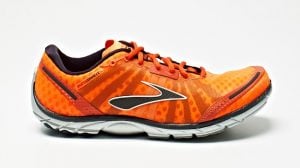
Let’s think about many well-known barefoot shoes and at the difference between those and barefoot sandals. Let’s dive into this. Many zero drop shoes on the market have the heel and toe at the same height, except for a big giant curve in the front. Your toes don’t naturally do that when they’re on the ground. You don’t need that. That toe spring doesn’t like to bend down the way your toes like to do at certain points when you’re running. How barefoot does that feel to you?
It’s really flexible in the forefoot in the upwards direction. That’s cool. Not so much where your toes are supposed to bend, but at the ball of your foot that’s flexible. The midsoles tend to be stiff as a brick from just behind the ball of the foot to the heel. There are some barefoot shoes that even advertise that they have a shank in the midfoot to keep the midfoot from moving. Your midfoot includes your arch, which likes to move, so that’s problematic.
Many minimalist shoes still have a lot of padding underneath the midfoot. Sometimes you need padding. If you’re going to be on a really aggressive trail and you don’t want to pay attention to what you’re stepping on or in. I can make an argument for using padding there, but it’s certainly not natural. The other thing about padding is if you have something that’s stiff across the back, if you land on something pointy your ankle collapses. This means you need ankle support because the sole made your ankle unsupported and unstable. If you don’t have that stiffness, you don’t have that kind of problem. The idea of barefoot shoes is just not as simple as people like to make it seem.
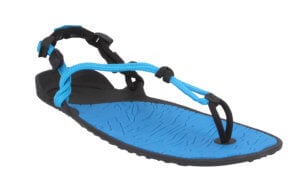
Let’s take a look at something like Xero Shoes. Take the Cloud sandal. This is crazy, crazy lightweight. It has our FeelTrue® rubber for great grip and our BareFoam™ for a little extra comfort. It rolls up and fits in your pack or your pocket. It takes up no room. It’s as close to barefoot as you’re going to get except for making your own sandals, our do-it-yourself sandal-making kit. You can get our 4-millimeter Connect sole, which really is just like you’ve replaced the sole of your foot with a bit of protective rubber. It’s still this amazing ground feel and great barefoot feel with just a layer of protection.
 |
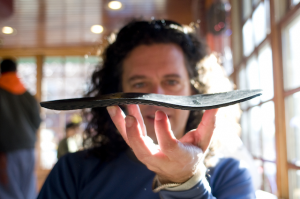 |
Let’s talk about zero drop, we like to say Xero drop because there’s no elevated anything. There’s a slight contour. Even this little bit you could say, “Hey, there’s a little toe spring in here too,” except that there’s nothing that prevents it from going the exact opposite direction. There’s nothing here that prevents your foot from moving completely naturally.
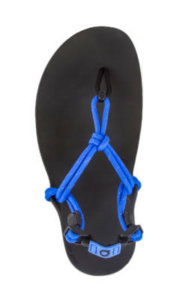 |
Why would you want to run in a pair of sandals instead of barefoot shoes? First of all, that freedom, that real natural movement. Secondly, the fit. Now, the narrowness of a minimalist running shoe isn’t necessarily a bad thing. But many people have wide forefeet. For some people that narrowness won’t fit their feet. Look at your feet and tell me if they are the shape of normal shoes and if they are, it’s only because you’ve been wearing pointy normal shoes for way too long. Look at our Genesis sandal to the left. If your foot isn’t shaped like they are, you can actually trim these with a kitchen scissors and get a perfect fit.
Another reason that you would want to run in these other than fit: freedom is another great reason. Oh my gosh, it feels so good to run in a pair of sandals just because there’s nothing else—there’s only a little protection and something holding it on your foot. It’s totally great. |
The simplest reason I can say to try running sandals, is because of the freedom, the fit, the function, natural movement that you get, the feel, the natural feedback that you get with just enough ground feel so that you are getting feedback and just enough protection so you’re not worried. See our Z-Trail Sport Sandal sandal. It’s a little bit thicker, still great natural flexibility, but it’s designed to give you natural movement plus protection for aggressive trails with our FeelTrue® rubber, our TrailFoam™ to even out the bumps, our BareFoam™ to give you that extra layer of comfort.
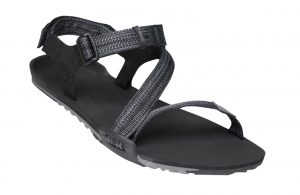
Natural fit, natural function, natural feel, natural flexibility, those are all the reasons that you would want to get in a barefoot product, but just be careful that you don’t get snowed by something that calls itself barefoot that frankly is no more barefoot than a pair of stilts.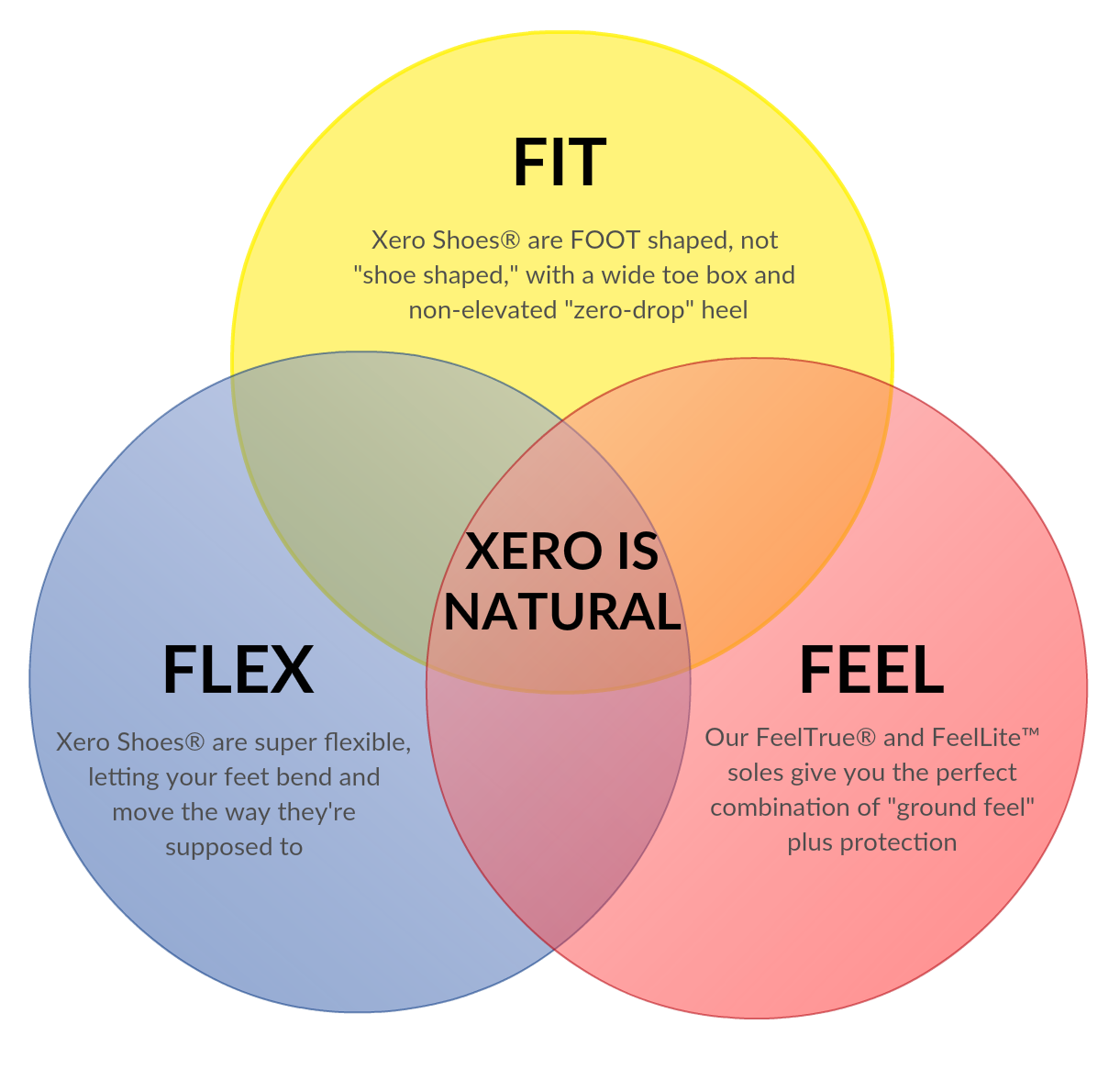
There are lots of different styles and designs for Xero Shoes. If you start with one of our do-it-yourself kits where you’re buying a sole that matches your foot size and you change the shape by cutting to match your unique foot shape with a pair of scissors. Then you have one of 22 different colors of laces that you mix and match with those, and then dozens of different tying styles that show up on our tying page. You can make everything from something really ultra-minimalist lacing to a little more decorative where you just add a pendant. We’ve had a customer who painted her toes and then added beads to match. You can go really crazy and totally bling out a pair of sandals, or we’ve also got more less-fashion-forward styles with our sport sandal style.
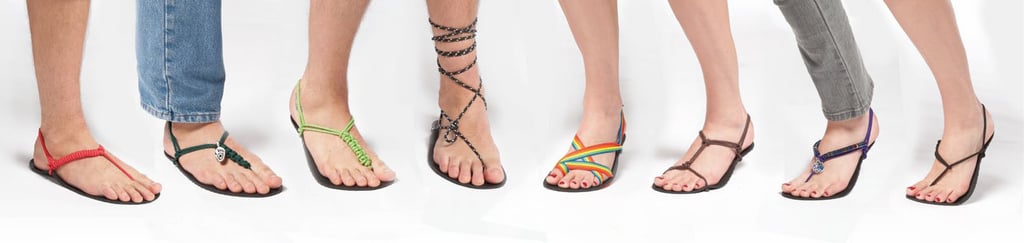
There’s pretty much everything you want whether it’s for men, for women, kids and toddlers. For kids and toddlers right now we would have Youth sizing for our ready-made Z-Trails, otherwise your best bet will be our do-it-yourself sandal kits where there are lots of options for making things work for them. If you’re going to a wedding or dressing up, there are styles that might work for you. If you’re a woman who likes to have a night on the town or a guy who’s very sure of himself.
We have lots of different styles, you’ll find what you want, and I want to see you design your own. If you look at our page about tying, you’ll find that a lot of these designs came from our customers, so we can’t wait to see what you come up with.
Men
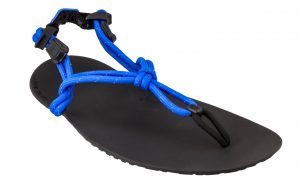
The Genesis Huarache Style Sandal |
The Cloud Huarache Style Sandal |
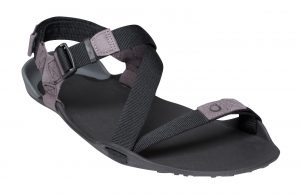
The Z-Trek Sport Style Sandal |
The Z-Trail Sport Style Sandal |
Women
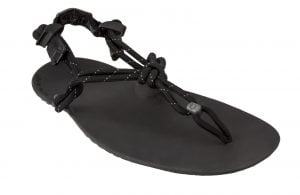
The Genesis is Unisex |
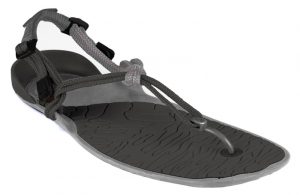
The Cloud is also Unisex! |
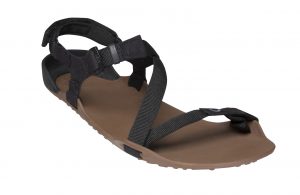 The Women’s Z-Trek is slightly narrower than the Men’s The Women’s Z-Trek is slightly narrower than the Men’s |
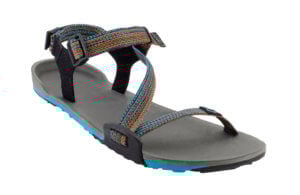 The same is true of the Women’s Z-Trail The same is true of the Women’s Z-Trail |
Kids & Toddlers
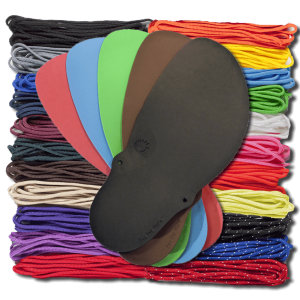 |
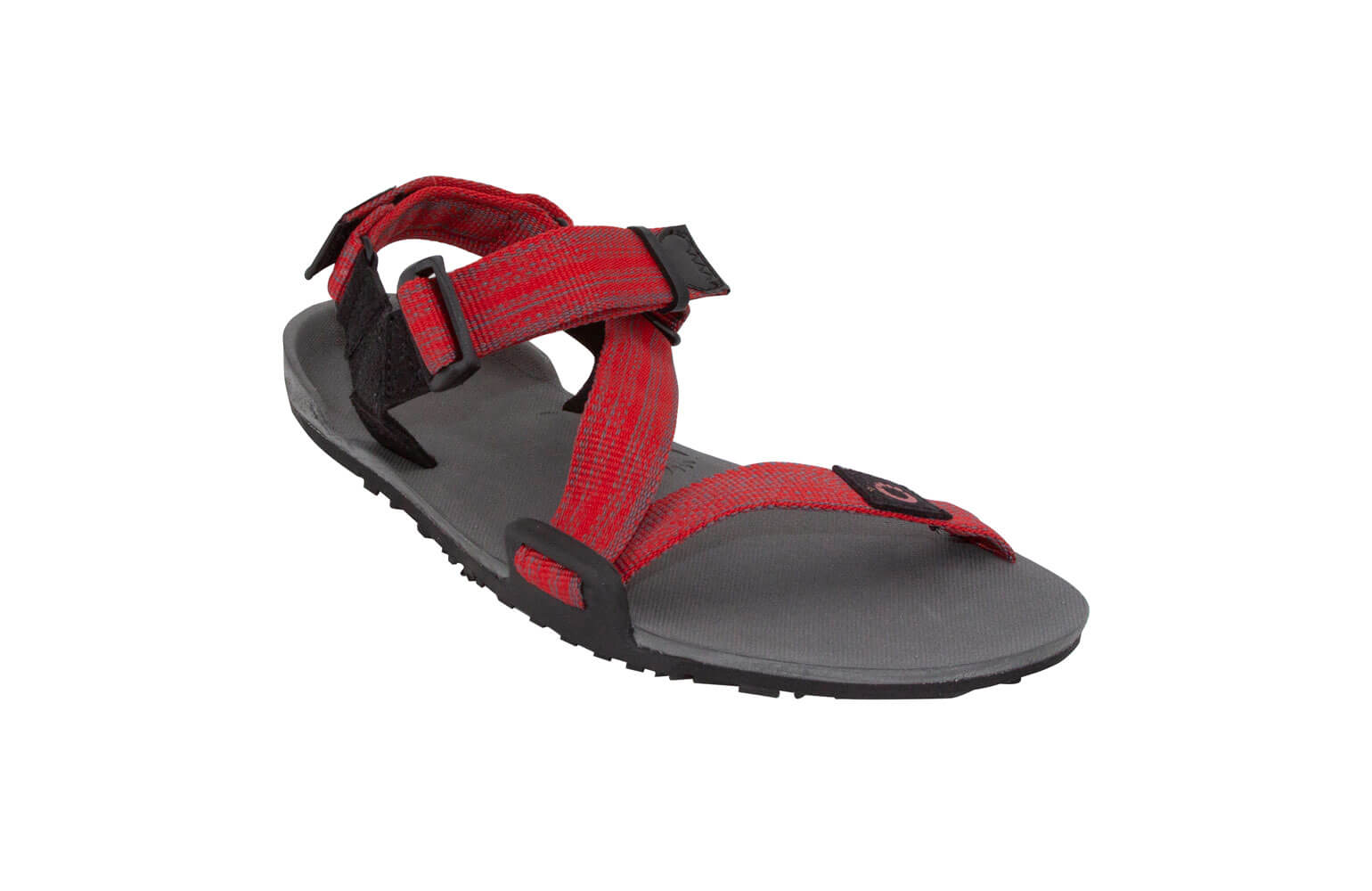 The Youth Z-Trail Sport Sandal, now available for kids! The Youth Z-Trail Sport Sandal, now available for kids! |
Baby
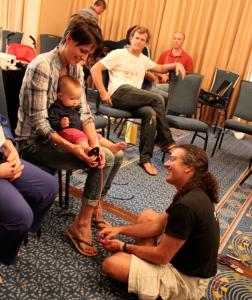 |
I’m not going to say that getting out of running shoes and into a barefoot shoe or, better, a barefoot-inspired sandal, is going to give you amazing benefits. It may not allow you to slam dunk a basketball and throw the shot put 75 feet and make you more money and help you get a husband or wife. I’m not going to make claims about specific benefits you’re going to get, because there frankly just isn’t the science to back those claims. That doesn’t mean they aren’t true. It just means that we don’t have good science to back that up so that we can’t legally make some of these claims.
You will hear people making claims all the time and you want to look at them with a grain of salt. The thing that you want to do is to just think logically. Think about this simple question: Is your foot moving naturally or not? Is your foot being supported to move naturally or is the support that you’re getting preventing it from moving naturally?
If you look at a big shoe like a traditional running shoe, it’s elevating your heel, it’s stiff as a brick, it prevents you from feeling anything in the ground. Does that seem like that will be good for you? If you put your arm in a cast and you keep it there, is that good for you or does your arm come out weaker over time? After that you either need to strengthen it or, if you don’t take the time to strengthen it again, another cast. Even many “barefoot” shoes are really flexible across the top just at the forefoot. It’s lightweight, it has less of a heel, but it’s still the same basic idea – stiff along the midfoot and that shape doesn’t even fit my foot.
There are benefits that people claim you will get – getting rid of plantar fasciitis, getting rid of flatfeet, helping with high arches, getting rid of knee pain or back pain or hip pain or neck pain, all these things. If you think about them, if you use your muscles, ligaments and tendons and body correctly, it would make sense that these things can happen. We can’t promise that they will happen and we don’t want to until there’s science to back it up. What we say until then is just think about this logically. If it makes sense to you, give it a try. See what happens when you feel the freedom, feel the fun and feel the world of using your body naturally – natural fit, natural function, natural feel.
When the barefoot boom began back in 2009 thanks to this book, Born to Run by Chris McDougall, there was a really funny thing that happened from 2009 to early 2010. Shoe companies and running shoe stores came out saying, “You don’t want to try that because you’re going to kill yourself. You’re going to get Ebola and step on hypodermic needles and ruin your feet, and you’ll all get Achilles tendonitis and plantar fasciitis,” and none of this was true. First of all, you can learn to run barefoot without having calf pain or Achilles pain, certainly not plantar fasciitis. We have more people who have said they’ve cured themselves of plantar fasciitis by using their feet naturally rather than the other way around. Then by late 2010, the story changed because suddenly all of these companies were coming out with barefoot shoes.
Now, their “barefoot” shoes many of them were no more barefoot than a pair of stilts, and even the ones that did a better job, look carefully because the short form is they just started using the language of barefoot and the claims of barefoot for their minimalist products without any evidence that they actually could deliver on those benefits. You’ve never found a barefoot runner who said, “Oh yeah, that shoe is the same as being barefoot.” Even Xero Shoes, I’m the first one to admit, is not the same as being barefoot because you’re stepping on a piece of rubber every time or, in the Cloud, our BareFoam™, or in the case of our sport sandal the Z-Trail, same thing, a little BareFoam™. It’s not the same because when you’re barefoot, walking on all these different surfaces, all the nerves in the bottom of your feet feel these millions of different things and here you’re smoothing that out with our product.
|
|
|
When you start looking at some of these barefoot shoes or minimalist shoes, it’s a whole different game. The basic idea of a barefoot shoe is that it gives you more natural movement, more flexibility, they’re a lighter weight, they give you more ground feel. When you look at them with that in mind, “Does it really give me natural movement? Does it really put my feet in a natural position? Does it really let me feel the ground at the level that I would like to feel the ground? Does it really fit the shape of my foot?” You’ll see a very different story.
As an example, look at the barefoot shoe below. It’s still a lot of foam between you and the ground. It still has arch support that you probably don’t need. Your foot, your arch, provides support. The arch is a very strong structure. If you want to make an arch weak, support it. Push on the keystone, the whole thing falls apart. Just kind of logical. They are little more flexible in the forefoot but not flexible through the midfoot. It’s certainly more lightweight but definitely not as lightweight as something like our sandals or even as lightweight as something like the DIY kits.
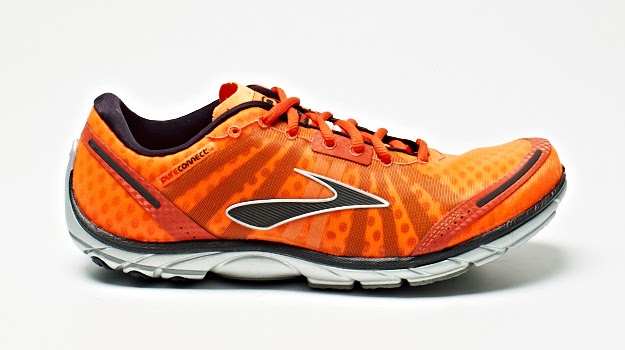
Also, the upper and the upper design can affect how your feet move as well in terms of natural. While the shoe above claims it’s zero drop, which means that the heel and the ball of the foot are at the same level, look at the toe spring that it has. That’s not a natural position for your toes.
So just use your brain when you look at things that are called barefoot shoes and ask yourself, “Does it really fit that characteristic of natural fit, natural flexibility, natural function, and natural feel?” and then that will be very helpful.
- Other Brands That Make “Barefoot” Shoes:
- Merrell
- Vivo Barefoot
- Cheeks
- Adidas
- inov8
- Vibram Five Finger
- New Balance
- Jambu
- Reebok
- Body Glove
- Barefoot Ted
- Saucony
- Sanuk
- Puma
- Fila
What can you do in a pair of Xero Shoes? People have done everything – walking on the beach; just going to work; running, of course, everything from a 5K to ultramarathons; taking a stroll down the street; hiking on trails; running on trails. We’ve had people playing golf. We have a lot of people who use these in the gym. They’re a great shoe for any pulling exercises or squatting exercises, deadlifts and squats because they’re flat. People use these for power-lifting. They’re not unnecessarily elevating your heel. They’re not too squishy, so they don’t make you unstable. People use these for CrossFit.
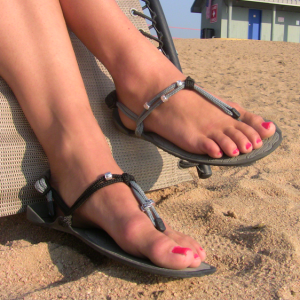
We’ve had people who just wear them casually. They don’t care about all the performance stuff. They just like the way they look. They like the way they feel.
We have people who wear these for water sports – for standup paddleboarding, for kayaking, we have some ocean kayakers who love particularly the Cloud because a) it floats, and b), it’s so thin. They have pedals in their kayaks for steering. They can feel the pedals, they get great feedback, but it also has great grip as well.
We’ve had fly fishermen use our Z-Trek sandals. We’ve had people use these for Zumba and other dance classes.
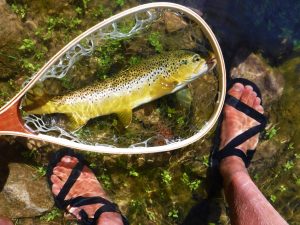
Tennis, I wouldn’t necessarily recommend these for tennis or for basketball or anything that has a lot of lateral motion, there’s not a lot that’s keeping you from moving left and right. Even in our sport sandal, there’s still not a lot of protection for lateral motion, so I don’t recommend sandals for those types of sports.
The biggest thing is if you want the feeling of freedom that comes with wearing sandals, if you want that feeling of fun that comes with sandals, if you think about kids running through the sprinkler and just playing barefoot, if you want that kind of feeling, that’s my favorite use for a pair of Xero Shoes.
If you want to buy some barefoot shoes, it’s getting easier and easier. Obviously, you can find them on our website, XeroShoes.com/shop, and we have stores all around the world and more and more coming on every week. I’m making this video in 2016; in 2017, you may see Xero Shoes in as many as 3000 different stores. Look on our XeroShoes.com/stores page and you’ll find stores in Australia, in the United Kingdom, in Canada, and dealers all around the world. Of course, if you want to buy directly from us, we’re more than happy to ship to over 94 countries so far.
Our goal is to let more people experience the fun and benefits of natural movement—natural fit, natural function, natural feel—so they can go out and feel the freedom and feel the fun and feel the world. Enjoy.
- Countries With Stores
- Australia
- Canada
- Czechia
- France
- Germany
- Israel
- Japan
- Netherlands
- Singapore
- Slovakia
- Spain
- Thailand
- United Kingdom
- United States
You’re absolutely right.
Being in bare feet is not the same as being in shoes. We’re the first to admit it.
Barefoot is ideal. But it’s not always practical.
The term “barefoot shoes” came about to describe footwear that gives you as much of a “barefoot feel” as possible, that let’s your feet bend and move and flex naturally, and gives you as much ground feel as possible.
The idea is that for times when you can’t be without shoes, you’re getting the next best thing to, well, being without shoes.
New to “barefoot shoes”? Trying to decide between the minimalist shoe options?
I know the feeling. Back in 2009, when I knew I wanted the benefits of being barefoot, but with a bit of protection (and something that would let me get into restaurants), I tried everything.
I LOVE our new minimalist shoes… they’re built off of our sandal base so they’re as close to barefoot as any shoe I’ve ever tried.
That said, if you want a “more barefoot” experience, you’ll want to try a sandal at some time. Here’s why.
- Better Bare Foot Feel — You want to feel the ground as much as possible, without having to worry about what you’re stepping on. With our FeelTrue® outsoles, you get the closest thing to a barefoot feel, but with the protection you want. BTW, don’t be fooled by some shoe companies that claim to have a 4mm or 6mm outsole. If the sole is stiffer, it’ll reduce the ground-feel. And if they add any padding on the inside of the shoe, that contributes to the thickness.
- Natural Movement— You want to let your feet move and your toes flex and wiggle without anything getting in the way. With the dual-direction chevron treads and the flexibility of our FeelTrue® rubber, our outsoles let you grip the ground. And with nothing restricting the top of your foot, your toes can lift and splay as much as you want.
- Anti-bacterial/Anti-Odor — The air circulates around your foot, instead of having your feet wrapped up.
- Easier Fit — Our sandals will fit your foot, no matter what shape it is — curved, straight, narrow, wide. And you can trim some of them with a pair of kitchen scissors for a perfect fit.
- Lightweight — At 3.4 ounces for a men’s size 9 (the 4mm DIY kit), you’ll have a hard time finding anything that feels like, well, you’re almost barefoot. We’ve had customers forget they were wearing their Xero Shoes and go to bed with them still on!
- Multi-purpose — People all around the world use Xero Shoes for everything from walking, to hiking, to camping, to yoga, to stand-up paddleboarding, to sea kayaking, to sky-diving, to running, to tackling 100-mile ultra-marathons!
- Convenient — Xeros roll or fold and fit in small spaces. Stick ’em in your pocket so you have them handy for a hike or to get through the airport faster.
- Personal Style — With 5 different sole colors, dozens of lacing styles, and even more decorative add-ons, you can have sandals that are high-performance, ultra-minimalist or fashion-forward and ready for a night on the town. In fact, those could be the same pair!
- Inexpensive — I don’t get how minimalist shoes and sandals can be $150-$200! Ours are under $80. Xero Shoes’ sandals are a fraction of that price. You could get 5 pairs (one in each color! 😉 of our DIY kits for the price of some minimal running shoes.
- Long-Lasting — People often ask how long Xero Shoes will last. True to our tire-sandal heritage, Xero Shoes come with a 5,000 mile sole warranty. Compare that to running shoes that you’re supposed to replace every 300-500 miles!